 After having posted some essays about Giordano Bruno and the Art of Memory, many people had asked for additional elucidation on Magic. What is it? What do I intend as Magic? Where did I learn such things? There were many confused questions, but also some questions driven by a curiosity to know more about a topic that is both ancient and extant at the same time.
I decided to write a series of posts about this topic, in response to the various questions sent to me, which may essentially be consolidated into a unique and fundamental question: “What is Magic?”
So, I would like to begin with a quote of Sir Arthur C. Clarke, the author of the novel 2001: A Space Odyssey:
“Any sufficiently advanced technology is indistinguishable from magic.”
Is there any better way to begin a series of posts devoted to the “Structure of Magic”, than this quote?
Even if it had been written with humorous intent, this quote reveals an indisputable truth: Magic is nothing but knowing. Who can control it, can use it. Who doesn’t possess it, fears it. In these contemporary times, we can even call it “technology”.
Indeed, if we ponder a bit, isn’t it true that we perform a sort of magic when we trace some symbols on the table with a mouse, which materialize on the PC screen in front of us? It’s something which is a bit unsettling, and at the same time amazing, especially if we don’t know anything about the functioning of a computer. Similarly, the apparition of cell phones and later, smartphones and iphones amazed us – real magic.
Imagine what would happen if we could hypothetically go back to the past, 300 or 400 years ago, and walk during the night with an electric torch. Wouldn’t people consider this a sort of Magic performed by great Magis or demigods? Even a simple watch would have been considered an absolute proof of witchcraft in many periods of the past.
So, this is Magic: a practice of Knowing that proposes to intervene on the phenomena of nature through the study of the Natural Laws. Not more, nor less. The simplest and most understandable definition I’ve been able to find.
Today we consider it quite a normal thing being able to use electric or nuclear energy, to control fire and water, or to fly, or drive at the speed of 250 kilometers per hour. The new frontiers of science suggest to us, that sooner or later, we’ll be able to perform teleportation or to become invisible, or to perform other tasks that today, are considered “impossible”.
But where lies the boundary between the possible and the impossible if we, as human beings, are able to surpass it continuously? What was impossible twenty years ago, today is considered so possible that it has become normal, obvious, even monotonous. In the same way, it’s possible to predict that, what is considered as “impossible” today, will become “normal” in the near future.
Magic.
The etymology of the noun “magic” in Greek Μαγεία (science, wisdom), is derived from the word which indicates the “magi” (Μάγοι) – Zoroastrian ministers in ancient Persia. Such individuals were expert in astronomy and astrology, and also had a Chaldean mathematical culture. Just to clarify, the distinction between astronomy and astrology occurred after the 14th century. Prior to that, the study of celestial phenomena was a unique discipline, both mathematical and humanistic.
The word “magi” comes from the root mag (“great being” or “being great”, “remarkable”), linked to the ancient Sanskrit term mah-ant, “gerat”, magh-ā and mag’-man, “greatness”. This word will develop to the Latin term magnus.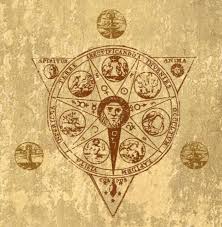
The distinction of “magi” is often mentioned in the Old Testament in The Book of Jeremiah (39:3 and 39:13), in The Book of Daniel (2:2), and in The Book of Isaiah (60:3). The name is also present in The Book of Psalms (70:9-11 and 68:30). In the New Testament, the only text that speaks about the voyage of the Magi to Bethlehem is the The Gospel According to Matthew (2:1-12), the oldest of the four canonical texts.
In his book, The History of Magic, Eliphas Levi writes: “The doctrines of the true Zoroaster are identical with those of pure Kabalism, and his conceptions of divinity differ in no wise from those of the fathers of the Church. It is the names only that vary ; for example, the triad of Zoroaster is the Trinity of Christian teaching, and when he postulates that Triad as subsisting without diminution or division in each of its units, he is expressing in another manner that which is understood by our theologians as the circumincession of the Divine Persons. In his multiplication of the Triad by itself, Zoroaster arrives at the absolute reason of the number 9 and the universal key of all numbers and forms. But those whom we term the three Divine Persons, are called the three depths by Zoroaster. The first, or that of the Father, is the source of faith ; the second, being that of the Word, is the well of truth ; while the third, or creative action, is the font of love. […] Zoroaster established the celestial hierarchy and all the harmonies of Nature on his scale of nine degrees. He explains by means of the triad whatsoever emanates from the idea and by the tetrad all that belongs to form, thus arriving at the number 7 as the type of creation…”
In ancient times, the Magus and his science were deeply respected, in the same way that today, is respected a recipient of the Nobel Prize or an eminent docent of a prestigious University. The Magi were renowned, and often well-rewarded as advisors of the royal courts.
Of course, such individuals were also well-feared because of their knowing, in a way similar to a hacker able to break a database system would be feared today.
The point lies always in Knowing: who possess it can be a precious ally or a dangerous foe.
But I don’t want to explore in this post, the application of Magic (I’ll speak about this in a further post on this topic), but rather clarify as best as possible, what is essentially, Magic. Nor do I want to give a historical vision of the same, or deepen the work of famous Magi such as Salomon, Abramelin, Paracelsus, Cagliostro, St. Germain, Jon Dee, Eliphas Levi, and others. It’s useless for the aim of this series of posts.
So, concretely, to what do we refer when we use the term “Magic”?
Let’s try with an example that can also be experienced: let’s assume that most of the readers had probably visited a gothic cathedral, and if someone hasn’t yet visited one, I strongly suggest to do it. Once entered into this place, you’ve probably noticed that the gaze is immediately attracted upwards.
Such perception, such experience of “being pulled upwards”, is not due to the fact that you are visiting a “sacred place”- specifically, it doesn’t depend on conditionings related to a religious education, but on innumerable architectural knowings inherent to this type of structure.
In a gothic cathedral, the ground tends progressively upwards. Mainly, from the entry way to the center of the temple, the floor is built slightly upward. Also, the pillars aren’t perfectly straight, but tend to converge toward the center, reflecting the Law of the Octave. The apse is built in a particular way, and the light is predominant in the space of the building: it animates and gives a measure to the forms, and it also has a symbolic meaning, mainly, the image of the luminous nature of the Sacred.
Also, the proportions of the building aren’t without intention, nor determined by aesthetic needs or by the spectacular effects. The proportions in these buildings are based from a vision of the art as science, the research of the geometric relations that lie behind the basis of the universe, and establishes the form of the divine manifestation. The same proportions can be found in music, where the harmonics are not casual, but are reflections of the celestial harmonies.
Indeed, the first gothic buildings had been constructed according to numerical relations similar to the musical intervals – the octave, fourth and perfect fifth – for example in the rapport between the dimensions of the bay (an architectural element) or of the transept with respect to the nave. In such a way, the sacred building literally resonates with the same universal harmonies. And such harmony is not a result of perfect symmetries, but of imperfections created with purpose.
It’s an example of sacred geometry explained by Fulcanelli, such as an example of objective art as explained by Gurdjieff.

A structure built in such a way and with such knowing, becomes a perfect “machine” that produces precise effects. Indeed, using the example of a gothic cathedral, once we enter this building, the thoughts become rarefied, the sight is pulled upwards, time seems to expand, the light becomes softer, giving to the spaces a specific meaning, bringing a deep feeling that is perfect to lead us to forget the external world and its illusions.
A gothic cathedral keeps thousands of technical expedients, studied to bring whoever to experience such emotion. It’s an inevitable thing: after having walked ten, fifteen, twenty-one meters inside the building, almost always 3×7, we look upwards and perceive a kind of “energy” that raises in us, a desire for purification.
All these experiences were wisely preordained by the builders of these cathedrals, and it has nothing to do with the fact that such buildings have become religious places. Indeed, the cathedrals, in the time of their construction, were also places for meeting and discussion, and not only places where to preach a religion.
The gothic cathedrals are places built “according to a specific science”, thus, with Knowing.
Individuals like Leonardo da Vinci, Brunelleschi, Bramante and many others including the creators of the gothic cathedrals, gained their knowing from a School. They learned the universal Laws, rules and principles. And, they were researchers in the field of Magic. Today, we would define such individuals as “scientists”.
So, this is Magic. We can define it as a practical act aimed to operate on the natural phenomena through the study of the natural laws. It’s a result of research, experiments and transformations from an element in another, with the goal to reach an inner perfection, protection, health and prosperity.
A science and a technology at the same time.
It’s a very important aspect to be understood, because, even in our personal experience, we can’t attain a real pleasure without knowing, but only the satisfaction of our instinctive needs. Specifically, we are perfectly able to survive, but not to “live” in the real meaning of the term.
Let’s try to consider our days: what motivates us, what drives us to do something other than the usual job and livelihood, eating, distraction, sleep and so on?
Needs and mechanicity are, in reality, the same thing: the need produces identification, and identification represents almost always, the fear of “losing something”, namely, the fear of “suffering”.
We fear that we are unable to live up to someone’s expectation, of being unable to do something, or to live an emotion; we fear the others’ consideration, the future, the failure, old age… and in order to avoid such suffering, we identify ourselves with whatever can keep us far from the source of suffering, desperately trying to find the peace we crave.
In vain. We are unable to rule ourselves, our life, and the suffering gets worse.
But there’s a way out, mainly, to consciously choose the friction which we must suffer anyway, as difficult and painful though it could be.
In initiate terms, we call this kind of choice “voluntary suffering”, which is the instinct of “going further”, using the resources we have at disposal in a determined context. We spoke often about the concept of “voluntary suffering” in this blog. However, it would be good to remember that it means to not abandon ourselves to the mechanical flow of events and to choose to “swim counter-current”. We gather the strength, and try to discipline the mechanical part of us.
 Discipline is the process that teaches us “how to do”, which we need to take an action (instead of suffering only and exclusively a reaction); it’s the principle that gradually crystallizes our idea and becomes Will. This is exactly what corresponds to the magical process of transformation.
The problem lies in the fact that almost no one is used to perceive his life as a goal, a result to be gained. We don’t have aims, nor have we decided on a goal to pursue during our existence. We have spoken to ourselves and others about partial goals – sometimes touching in their naive innocence, or about practical goals and urgently driven needs, but it’s not the same thing.
The Magus, Seeker of Truth, will do all that is possible to reach his final goal, and his preoccupations will essentially be devoted to that goal. Here rises the Work and the voluntary suffering: the decision of taking the challenge, the practice of generating intentionally-aimed problems in order to overcome them.
This pushes the Magus to increasingly more control of himself, to become more and more aware, until reaching the will to decide what he really wishes to do.
Indeed, there is no objective limit within us. A human being is designed with the possibility to evolve, and everyone of us, without exception, has the necessary tools to perform this.
The only sin that we can commit toward ourselves, is to think that we are limited: we can do whatever we wish to do, as individuals such as Michelangelo, Leonardo da Vinci, Giordano Bruno and others have done. We can show the impossible, even walking on water, and making it possible, depends on the goal we give ourselves.
Science, knowing and will are the tools, discipline is a method, and the “how to” achieve a specific result. But we don’t speak here about the usual discipline used to teach children. We are speaking about self-discipline – something that has to be self-generated, a result of the realization that we are mechanical, thus “imprisoned” in our own illusions. Discipline is the tool which makes us able to realize such a state of imprisonment.
The disciple (he who performs the discipline) will learn to recognize, to prize and then to love he who has already achieved the goal and who will be able to show precisely, the “how to escape this prison”.



 Life itself, and a little bit of what people usually call Karma, forced me to learn to become a good listener and, above all, a great observer, which gave me the possibility to develop and improve my understanding, and which also gave me the possibility to be able to notice certain tendencies in people whom I had met throughout my life. In such a way, with a bit of curiosity (and in the total absence of judgment), I had the possibility to notice some “little” contradictions that can be considered as “normal” for the personality of a human being, fragmented into so many little “i’s”.

 Since I wrote the first part of the

 And, I’ll take this opportunity to speak about an object that is a symbol for such a festivity. Yes, I am speaking about the Christmas tree. Indeed, it’s not a secret that the tree represents something more than a simple decoration for the pleasure of our eyes, at home or in the public square. Indeed, the trees have appeared as earthly fare before the designers and the urbanists. And, even if we do the best we can to destroy them, they’ll end their existence far after our own.
 In Northern India, in Central Asia, China, Tibet, Siberia, and in many places in Africa, trees are an object of cults: people tie on the trunk, tiny strings on which they light incense and insert flower wreaths. At the bottom of the tree, they deposit flowers, food, and lamps. This very ancient tradition is still extant throughout the World.
 evil spirits – the Egyptians the palm trees, and the Romans, the fir trees. As a sign of devotion towards the consecrated trees, the ancients would hang apples and other fruits as offerings to the divinities. This tradition was extended throughout Europe, in gratitude to the earth for its generosity and, as a sign of good luck, the farmers would hang the fruits of their harvests on the trees. The ancient Germans would hang stones on the branches of oak trees in order to keep away spirits who had escaped from the afterlife during the falling of the leaves. Successively, the trees became decorated with colored fruits, wreaths and candles.
 In the
 mind, are examined in depth by Giordano Bruno in De Umbris Idearum, a magical text where the author explained in depth, the art of memory.
 If the archetypes are the “indexes” of the library of the universe, then we can certainly hypothesize that, from the view of the renaissance Magus, the astrological symbols represent the immediate “sub-indexes”, namely, the intelligible categories which are closest to that which can only be foreseen, but never understood.
 Sarmoung's Blog